Showing posts with label baby. Show all posts

Monday, April 7

Baby teething fever - Does teething cause fever or diarrhea?

This blog has moved to a new website
Nutrition, Health & Wellness

Does teething cause fever or diarrhea?
Does teething cause fever or diarrhea in babies?
Teething in babies does not cause high fever or severe diarrhea. Teething is being incorrectly attributed to be the cause of several childhood ailments. Some of the symptoms of teething are swollen gum, decreased appetite for solid foods, irritability, drooling, rash on face, ear rubbing, gum rubbing, crying, pain, biting and sucking.

High body temperature, severe nasal discharge, persistent cough, persistent vomiting, decrease in urine output and severe diarrhea may require medical attention and are not classic symptoms of eruption of primary teeth.

In a survey of 550 parents in Udaipur, India, regarding parental beliefs about teething in babies, Gauri Kakatkar et al, found that "teething was incorrectly attributed to fever (70%), diarrhea (87.5%), and sleep disturbances (48.2%)". The research work was published in the journal 'Brazilian Oral Research' in 2012 Mar-April.

R.S.Ispas et al conducted a cross-sectional survey of seven groups of health professionals in New Zealand on persisting misconceptions about signs and symptoms of teething. The research work was published in 'the New Zealand dental journal' in March, 2013. The researchers concluded that one-third of participants incorrectly attributed fever to teething. 27% of participants attributed primary teeth eruption as cause of diarrhea.

These findings show that there is a common lack of knowledge about baby teething among parents as well as prevalence of misconceptions about the symptoms of teething in health professionals. There is an urgent need to educate parents regarding the teething process and its management and to dispel misconceptions about fever and diarrhea. Some health professionals may have to update their concepts about the causes of childhood illnesses like fever and diarrhea.

Does teething cause high fever in babies?

The primary tooth eruption may give discomfort, pain and stress to the baby for a week.
  • Four days prior to emergence of tooth and three days post-emergence are important in tooth eruption. In some babies, due to stress, pain and gum inflammation, there may be slightly elevated body temperature which is considered as low-grade fever (less than 102°F). Mild fever in babies may also be due to infection in the split gum. Injuries to gum while biting on objects can also give rise to mild infection and elevated temperature and fever.

    The age at which deciduous teeth erupt also coincides with the decline in antibody supply from the mother as well as exposure to infections. Parents must pay attention to any fever greater than 102°F and seek medical advice. They should not dismiss high fever as a symptom connected with primary teeth eruption. High fever, above 102°F, may be due to some underlying serious illness.

    Does teething cause severe diarrhea in babies?

    Babies tend to bite or chew any object they can lay their hands on during teething. Lack of hygiene or proper parental care can lead to infections of gastrointestinal system. Sometimes babies may injure their own gums and have infections. In such situations babies may have fever and diarrhea. Excessive salivation and swallowing the saliva may also cause mild diarrhea.

    If the baby suffers from severe diarrhea, medical advice must be sought. Severe diarrhea can lead to dehydration and many health complications. Most common cause of severe diarrhea is viral gastroenteritis. Certain types of bacteria or parasites can also cause diarrhea. If the teething baby affect by diarrhea has dry skin, dry mouth, sunken eyes or cries without tears, it is symptom of severe dehydration and immediate medical aid is required.

    Related topics on health and fitness tips:
    .
    .
    .
    .
    .
    .
    .
    .
    .
    .
    Interesting topics on health and fitness tips:
    .
    .
    .
    .
    .
    .
    .
    .
    .
    .

    References:
    1.Ispas RS, Mahoney EK, Whyman RA. Teething signs and symptoms: persisting misconceptions among health professionals in New Zealand. N Z Dent J. 2013 Mar;109(1):2-5.
    2.Sood S, Sood M. Teething: myths and facts. J Clin Pediatr Dent. 2010 Fall;35(1):9-13.
    3.Owais, A., Zawaideh, F. and Bataineh, O. (2010), Challenging parents’ myths regarding their children’s teething. International Journal of Dental Hygiene, 8: 28–34.
    4.Gauri Kakatkar, Ramesh Nagarajappa, Nagesh Bhat, Vikas Prasad, Archana Sharda, Kailash Asawa. Parental beliefs about children's teething in Udaipur, India: a preliminary study. Braz Oral Res. 2012 Mar-Apr;26(2):151-7.

    Current topic in health and fitness tips:
    Does teething cause fever or diarrhea in babies?

    Tuesday, March 18

    Teething rash - Baby teething rash on face - Drool rash

    This blog has moved to a new website
    Nutrition, Health & Wellness

    Baby teething rash on face - Drool rash
    Drool and teething rash on baby's face
    Teething rash is drool rash. Teething in babies is quite often followed by drool rash. Understanding the teething process can make us realize the basic cause of the associated drool rash. Tooth buds appear on both the arches (jaws) when the fetus is about eight weeks old. They keep on growing inside the gum.

    A newborn already has primary teeth growing inside the gums. As the teeth grow, the gums swell and become sensitive and painful. Due to the gum irritation the baby may start drooling a lot. The baby may develop rash around the mouth and other areas like chin, cheeks, neck and chest, which are constantly wet with saliva. Generally when the baby is about six months old, the teething commences and usually the lower central incisors start emerging out of the gums.

    Related posts: <> <> <>

    The drool rash should not be confused with eczema or diaper inflammation. Diaper rash typically appears on the diaper area as prickly red spots. The inflammation may become severe and may spread to baby's buttocks, tummy and thighs. It is usually triggered by moisture and wetness in the diaper area. Bacterial growth on the remnants of urine or stool leads to the skin inflammation. Frequent changing of diapers and keeping the diaper area dry will help. Eczema (atopic dermatitis) causes red, swollen and itchy inflammation of the skin. Eczema may flare-up in affected babies when they are teething.

    Causes of teething rash

    The cause of the inflammation is excessive drooling. As there is excessive salivation, the area around the mouth becomes constantly moist. Babies may drool even while sleeping. The saliva soaked skin becomes chapped and gives rise to inflammation. Opportunistic bacteria and fungi may start growing on the inflamed skin and worsen the drool rash. The saliva may get spread on to the baby's cheeks. The saliva may also drip on to the chin, neck and chest and cause rash in all these areas.

    Treatment for drool rash

    To control and stop the rash from spreading the first effort by the parents is to keep the baby's mouth area dry by frequent dabbing with a soft cloth. Care should be taken not to wipe the tender skin as it may get further inflamed. To reduce the salivation the baby may given some cool soother, ring or cloth to chew on. A bib can be placed and changed regularly to keep the neck and chest dry and clean from saliva. Petroleum jelly may be applied on areas of baby's skin likely to get wet in order to keep out the drool and teething rash.

    Current topic on health and fitness tips:
    Drool and teething rash on baby's face.

    Wednesday, March 12

    Primary teeth - Milk teeth

    This blog has moved to a new website
    Nutrition, Health & Wellness

    Primary teeth - Milk teeth
    Primary teeth - deciduous, baby, temporary or milk teeth
    The primary teeth or milk teeth are the first set of teeth to develop in infants. The primary teeth erupt and become visible in the mouth typically when the baby is about six months old. There are many exceptions, and teething in some babies may be delayed and start as late as 18th month. Some infants may be born with natal teeth and in some teething may start in the first month itself.
    Related posts: Newborn tears <> Blocked tear ducts in newborn <> Sleep and children
    In general, the primary teeth start erupting by about sixth month of age. It may take 30-36 months for the completion of eruption of all the primary dentition. In total, twenty milk teeth are formed, ten on the maxilla and ten on the mandible. The primary dentition is made up of two central incisors, two lateral incisors, two canines and two first molars and two second molars on each jaw. The child starts losing the milk teeth by the 6th year to be replaced by permanent dentition. The falling of primary dentition and their replacement may go on till 12-13 years of age.

    Milk teeth development

    The primary dentition start developing during the pregnancy. When the human embryo reaches sixth week of development, dental lamina is formed as an in-growth of oral ectoderm. The process starts in the midline and spreads to posterior region.
    dental lamina and dental bud
    dental lamina and bud

    By the time the fetus reaches eight weeks stage, ten dental buds are formed on the upper arches as well as the lower arches. These dental buds keep developing inside the gums and by the sixth month erupt out of the gums. Generally, the mandibular central incisors are the first milk teeth to appear. The maxillary second molars are the last to erupt.

    Nutrition for milk teeth development

    Calcium, phosphorus, vitamin A, vitamin C and vitamin D are essential nutrients for the proper development of healthy dentition. Dental enamel and dentin are composed of hydroxyapatite crystals and calcium and phosphorus are needed for their proper formation. Vitamin D regulates the availability of calcium. The deficiency of these minerals and vitamin D may result in less mineralization of hard structures.

    Keratin and collagen are required in the developmental process. Vitamin A is necessary for keratin formation and vitamin c is essential collagen synthesis. The deficiency of vitamin A may affect enamel formation. Fluoride makes the structure resistant to demineralization and caries formation by getting incorporated into the developing hard tissues. Excess of fluoride during teeth development can lead to fluorosis.

    Eruption of primary teeth

    The central incisors erupt by 6-12 months and the lateral incisors emerge by 9-16 months. The mandibular incisors appear earlier than their maxillary counterparts. First molars emerge by 12-20 months and second molars emerge by 22-36 months. The canines appear by 15-24 months of age.

    The importance of milk teeth

    The appearance of milk teeth and their proper development is very important for the development of buccal cavity. The permanent dentition develop from the same dental germ. The development of the skill of chewing of food and speech require functional primary dentition. The jaw bones and muscles depend upon the milk teeth for developing proper dimensions and form of the dental arches for the emergence of permanent dentition. Early loss of primary incisors usually does not have effect on the later dentition. However the early loss of primary canines or primary molars may result in space loss for the permanent dentition.

    Differences between the primary and permanent teeth

    Though the internal anatomy is similar, the primary and permanent dentition differ in many aspects. The permanent dentition is larger in size. Premolars are present in the permanent dentition. The enamel in the primary dentition is less mineralized, thinner and more translucent. Due to thin layer of enamel caries can form easily. The pulp chambers are large and the roots small and narrow in primary dentition. The primary dentition is temporary and falls off to give place for the permanent one.

    Caring for primary teeth

    The sooner we start cleaning infant’s milk teeth, the better. Gums and milk teeth may be wiped clean with a clean warm soft moist cloth after feeds. Depending upon the number of erupted milk dentition, the baby may be introduced to daily brushing by 12-18 months of age. By the age of 2 years a visit to a dentist is recommended to know the health status of the primary dentition. The caries formed in the milk teeth may affect the health of the permanent dentition.

    Caries prevention in milk teeth

    Poor oral hygiene is the root cause of caries formation. Infants tend to fall asleep while breast-feeding or bottle-feeding. The last mouthful of milk may remain in the mouth if they were feeding in the lying position. The milk may decay and caries may develop. To prevent teeth decaying and also infections of the eustachian tubes and ear, infant's head must be at a higher elevation than the throat while feeding milk. It prevents milk from staying back in the mouth even if the baby falls asleep whilst feeding.

    References:
    1.Alexander K. C. Leung and William Lane M. Robson. Natal teeth: a review. J Natl Med Assoc. 2006 February; 98(2): 226–228. PMCID: PMC2595049.
    Image source: http://en.wikipedia.org/wiki/File:Dentallamina11-17-05.jpg
    image author: Dozenist | License: CC BY-SA 3.0
    Current topic on health and fitness tips:
    Milk teeth are primary teeth.

    Sunday, February 16

    Baby teething age

    This blog has moved to a new website
    Nutrition, Health & Wellness

    Baby teething age
    Baby teething age
    The average teething age of babies is six months. It is quite common for them to start teething as early as three months of age. Likewise in many of them the teething may start as late as twelve months of age.
    The milk teeth start appearing sooner in girls than in boys.

    The general pattern of emergence of deciduous teeth is as follows. The central incisors emerge first at the age of 6-12 months. The lower central incisors start emerging earlier than the upper central incisors. The emergence of the lateral incisors may occur at 9-16 months of age.

    The emergence of the canine teeth may commence by the 16th month of age and by 24th month all the canines will have emerged. The first molars start emerging by 14 months and by 20th month all four first molars will have emerged.

    The emergence of the second molars may commence by 20 months and get completed by 24 months. The emerging of teeth may go on till 3 years in some children which it is quite normal. Delayed teething beyond 18 months requires a visit to a dentist as there may be some underlying health problem.

    There are many exceptions to the above pattern. Neonatal teeth are the teeth present at the time of birth. If the emergence of teeth occurs by the first month, the teeth are known as natal teeth. There are many teething problems to be faced by the baby. Teething symptoms in them include irritability, tender and swollen gums and pain. They may try to place fingers or objects into the mouth to find relief.
    The primary lower central incisors
    primary lower central incisors

    At the time of emergence of teeth from the gums they may suffer from teething pain. In some cases there may be mild teething fever due to mild gum infections. The excessive drooling may cause teething rash on the face. There are many known home remedies for teething to bring relief to the baby.

    Whatever may be the age of teeth emergence, dentists recommend brushing teeth as soon as they appear. It is not advisable to wait till 2-3 years for the teething to complete before starting to brush. Early childhood caries (ECC) in babies of over 6 months of age is becoming more common. Nursing caries occur in prolonged breast-fed children and in those continuing bedtime breast-feeding. Lack of oral hygiene by 18 months is also a risk factor for ECC.

    Topics related to 'baby teething age':
    .
    .
    .
    Images source:
    http://en.wikipedia.org/wiki/File:Baby_teeth_in_human_infant.jpg
    image attribution: Chrisbwah | License: CC BY-SA 3.0
    Current topic in health and fitness tips:
    Baby teething age.

    Thursday, January 30

    Baby teething - An overview

    This blog has moved to a new website
    Nutrition, Health & Wellness

    Baby teething - An overview
    Baby teething
    Teething in babies is a natural process, which becomes an event of great excitement and anticipation for the parents and near and dear ones. The primary teeth start developing when the fetus is six months old. Teething is the emergence of primary teeth through the gums. In most babies, this starts happening when they are around six months old and may go on till they are three years. Teething may cause pain, irritation, rash or fever in some babies, making them fussy. However many of them go through this stage without much problems.

    Teething in babies

    Earlier, many old remedies like blistering, bleeding and lancing of gums and application of teething powders were tried to help the teeth to "cut" and emerge through the gums. In early twentieth century, many deaths of babies in their first year of life were wrongly attributed to teething and related diseases.The eruption of the tooth is promoted by the periodontal ligament.

    In fact, there is no 'cutting' of the gum in babies.
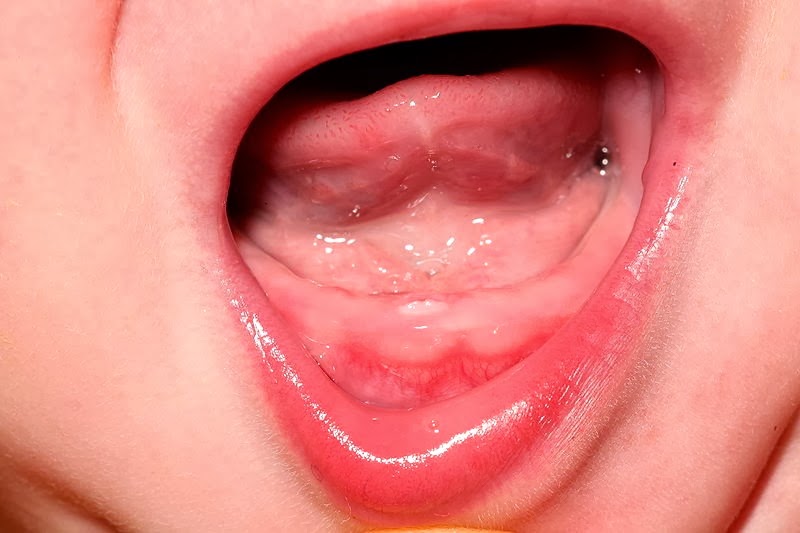
    the primary lower central incisor about to emerge
    1.teething in baby
    There is shrinking and cross-linking of collagen fibers of the periodontal ligament and the contraction of the fibroblasts, making way for the tooth to emerge.

    Baby teething age

    Teething in babies generally starts from six months onwards. However there are many exceptions. Primary teeth eruption in some babies may start as early as three months. In some babies it may be delayed up to 18 months.

    the primary lower central incisor emerging from the gum
    2. the primary lower central incisor emerging
    Normally teething occurs in pairs and the lower central incisors emerge first. By the third year all the four incisors, four canines, four first molars and four second molars may complete eruption. From the sixth year onwards the primary teeth get gradually replaced by permanent teeth.

    Signs and symptoms of teething

    • excessive drooling or dribbling by the baby
    • urge to bite
    • soreness and swelling of the gums
    • mood changes
    • pain
    • mild rash around the mouth
    • sleeplessness
    • restlessness
    • slightly elevated temperature
    • pulling on the ears
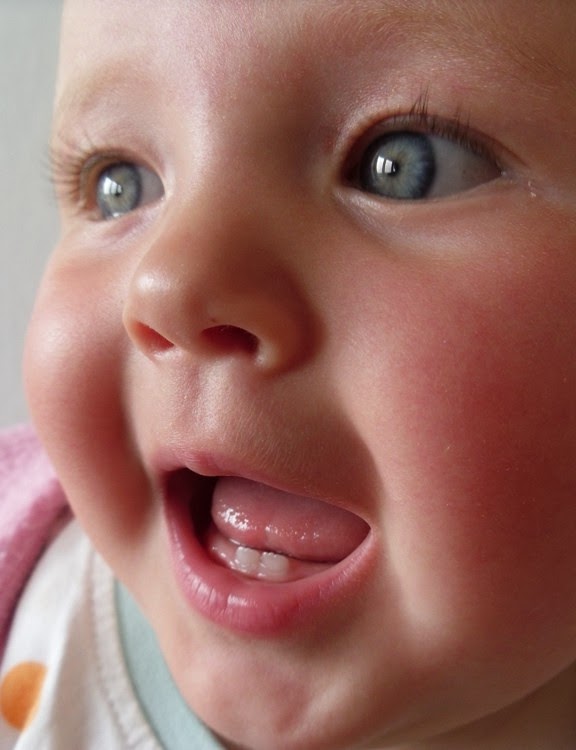
    The primary lower incisors have completely erupted
    3. Baby with central lower incisors

    Teething problems and remedies

    Most of the babies may suffer from pain at least at some stage of the tooth emergence. In rare cases rash may occur around the mouth. There may be slightly elevated body temperature when the teeth emerge out of the gums.

    Teething pain
    The intensity of pain and pain tolerance levels differ among babies. If there is obvious pain and continuous crying, baby-safe pain-relief treatments may be tried under the guidance of a dentist. Chewing cold objects and applying cold pressure on the gum may give temporary relief to the baby. Over-the-counter medicines should not be given to the babies. The risks and adverse effects from inappropriate medication may grossly outweigh the benefits in pain management.

    "Aspirin (acetylsalicylic acid) should not be given to babies and teenagers as it may cause Reye's syndrome, a rare but severe illness of brain and liver".

    Teething rash
    The excessive drooling or dribbling during the teeth emergence may cause rash on the mouth, chin, face and chest. Frequent wiping of the chin and face may prevent the rash. Wiping must be done very gently as frequent wiping itself can cause rash in babies. Petroleum jelly may be applied on the rash for soothing the irritation. It will also function as a barrier cream. Rashes not connected to drooling must be investigated as they may indicate some other illness.

    Teething fever
    In some babies there may be mild fever when the primary teeth emerge, which can be due to mild gum infections and trauma. It is estimated that 90% of the babies are infected by human herpesvirus 6 (HHV-6) by age two. The infection may take the form of gingivostomatitis causing high fevers and facial rash. If the herpes infection occurs in a baby concurrently with teeth emergence, it is quite often misdiagnosed as teething fever.

    Delayed late teething
    Delay in teething in babies sometimes runs in families. A pediatric dentist must be consulted if a baby has a toothless grin at 18 months. It could be a very normal delay without any medical condition. If the baby is malnourished and is underweight, the delay could be due to nutritional deficiency, especially of the vitamin D and calcium. Hypothyroidism, a medical condition, causes delayed emergence of primary teeth and delayed walking.

    Natal teeth

    Some babies have teeth (lower central incisors) at the time of birth. They are known as natal teeth. They are relatively rare, occurring as isolated incidents. Natal teeth do not have root structure, are often wobbly and are loosely attached to the gums by soft tissue. Though generally harmless, sometimes they may be associated with a medical syndrome.

    Neonatal teething

    Neonatal teeth are similar to natal teeth, but emerge during the first month. They may be left in the mouth as long as they are not causing difficulties to the baby or the mother. If the tooth is very loose, there is a possibility of aspiration by the baby and the tooth may be removed by a dentist. Do not try to pull it out as there is the risk of damaging the permanent tooth beds.

    Milk teeth (deciduous teeth, primary teeth, baby teeth or temporary teeth)
    The primary dentition is made up of twenty teeth; four central incisors, four lateral incisors, four canines, four first molars and four secondary molars. From the sixth year they are gradually replaced by permanent teeth. All the incisors and canines are replaced. However the first molars and second molars are replaced by premolars.

    Images sources:
    1.http://en.wikipedia.org/wiki/File:Teething.jpg
    2.http://commons.wikimedia.org/wiki/File:Teething_2.jpg
    3.http://en.wikipedia.org/wiki/File:Baby_teeth_in_human_infant.jpg
    1 & 2 images Attribution: Daniel Schwen | License: CC BY-SA 3.0
    Image 3 attribution: Chrisbwah | License: CC BY-SA 3.0
    Current topic in health and fitness tips: Teething babies